JOURNAL CLUB ยท ARABIC

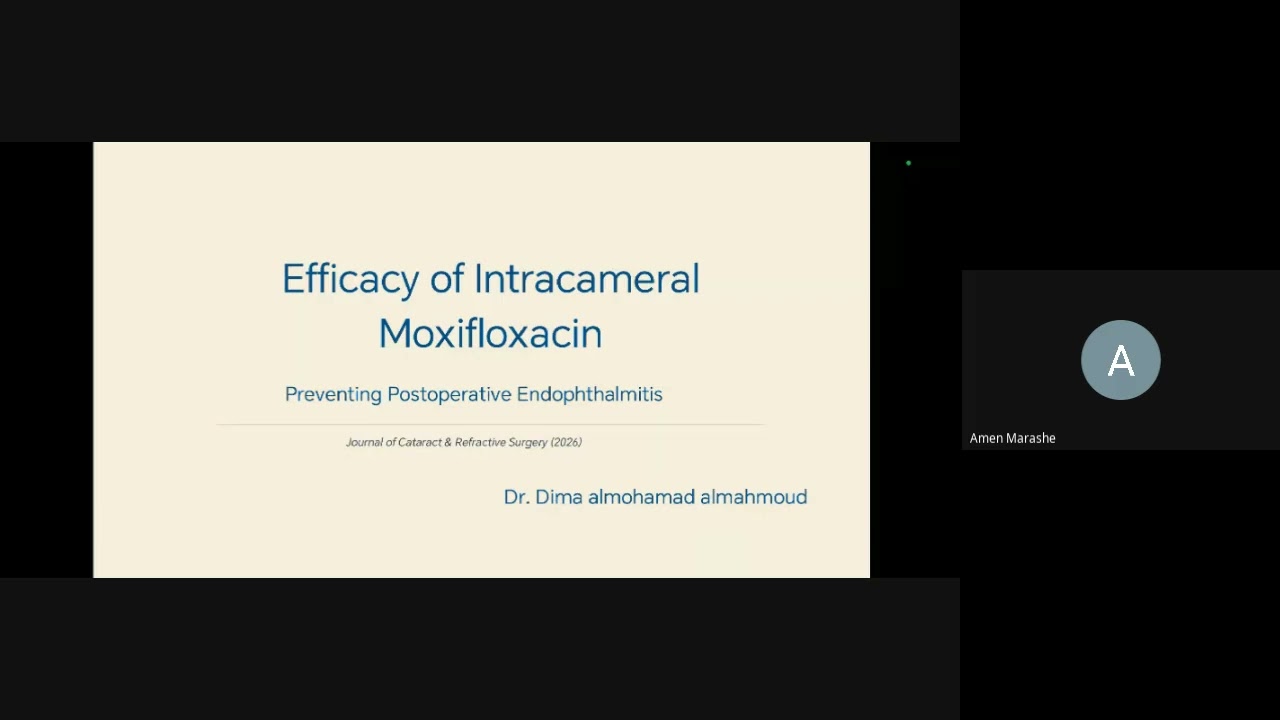
Intracameral Moxifloxacin for Endophthalmitis Prophylaxis

ุงู„ู…ูˆูƒุณูŠูู„ูˆูƒุณุงุณูŠู† ุฏุงุฎู„ ุงู„ุญุฌุฑุฉ ุงู„ุฃู…ุงู…ูŠุฉ ู„ู„ูˆู‚ุงูŠุฉ ู…ู† ุงู„ุชู‡ุงุจ ุจุงุทู† ุงู„ู…ู‚ู„ุฉ

A journal club session reviewing the evidence for using intracameral moxifloxacin as prophylaxis against post-operative endophthalmitis following cataract surgery โ€” presented and discussed in Arabic.

Session Overview

Post-operative endophthalmitis is one of the most devastating complications following cataract surgery. While rare, it can lead to severe vision loss if not prevented or treated promptly.

This journal club session reviews the current evidence supporting the use of intracameral moxifloxacin at a dose of 100ยตg/0.1ml as an endophthalmitis prophylaxis strategy during cataract surgery. The session covers study designs, efficacy data, safety profiles, and practical clinical recommendations.

  • Drug profile: Moxifloxacin is a fourth-generation fluoroquinolone with broad-spectrum activity against common endophthalmitis pathogens.
  • Route of administration: Intracameral injection at the end of cataract surgery ensures high local drug concentration.
  • Evidence reviewed: Multiple retrospective and prospective studies demonstrating reduced post-operative endophthalmitis rates.
  • Language: Session presented and discussed entirely in Arabic.
Moxifloxacin Intracameral Prophylaxis Arabic

๐ŸŽฌ Watch the Session

Full journal club session presented in Arabic โ€” reviewing the evidence for intracameral moxifloxacin as endophthalmitis prophylaxis.

Intracameral Moxifloxacin for Endophthalmitis Prophylaxis โ€” Journal Club (Arabic)

๐Ÿ“‹ Evidence & Key Points

Summary of the key evidence and clinical recommendations reviewed in this journal club session.

๐Ÿ“ Key Takeaways

Rationale for Intracameral Prophylaxis

Topical antibiotics alone may not achieve adequate intraocular drug levels. Intracameral injection delivers a high concentration of antibiotic directly to the anterior chamber, the primary site of bacterial entry during cataract surgery.

Dosing & Administration

  • Dose: Intracameral moxifloxacin 100ยตg/0.1ml
  • Timing: Injected at the conclusion of cataract surgery
  • Preparation: Diluted from commercially available ophthalmic solution under sterile conditions

Efficacy Evidence

Meta-analyses and large retrospective studies have demonstrated that intracameral moxifloxacin significantly reduces the incidence of post-cataract endophthalmitis compared to no intracameral prophylaxis. The reduction in endophthalmitis rates is consistent across multiple study populations and geographic regions.

Safety Profile

  • No significant corneal endothelial toxicity at recommended doses
  • No increased risk of toxic anterior segment syndrome (TASS) when properly prepared
  • Favorable safety profile in large case series

Clinical Recommendations

  • Intracameral moxifloxacin 100ยตg/0.1ml may reduce post-cataract endophthalmitis rates
  • Should be used in conjunction with standard preoperative antisepsis (povidone-iodine 5%)
  • Consider institutional protocols for sterile preparation and administration
  • Multidrug-resistant bacteria may benefit from povidone-iodine 0.0025% irrigation during PPV
100ยตg/0.1ml Fluoroquinolone Post-Cataract Povidone-Iodine

โš ๏ธ Educational Use Disclaimer

This journal club session is designed for professional education among ophthalmologists. The content represents a review and critical appraisal of published literature and is intended for educational purposes only. All clinical decisions regarding antibiotic prophylaxis must be made by qualified specialists based on individual patient assessment, institutional protocols, and current guidelines.

Watch the full session

View the complete journal club discussion on the mRetina Meeting platform.

Elevate Your Practice

Beyond collaborative meetings, explore our AI tools, curated video courses, and digital textbooks.