Should acute central serous chorioretinopathy be treated immediately or observed?
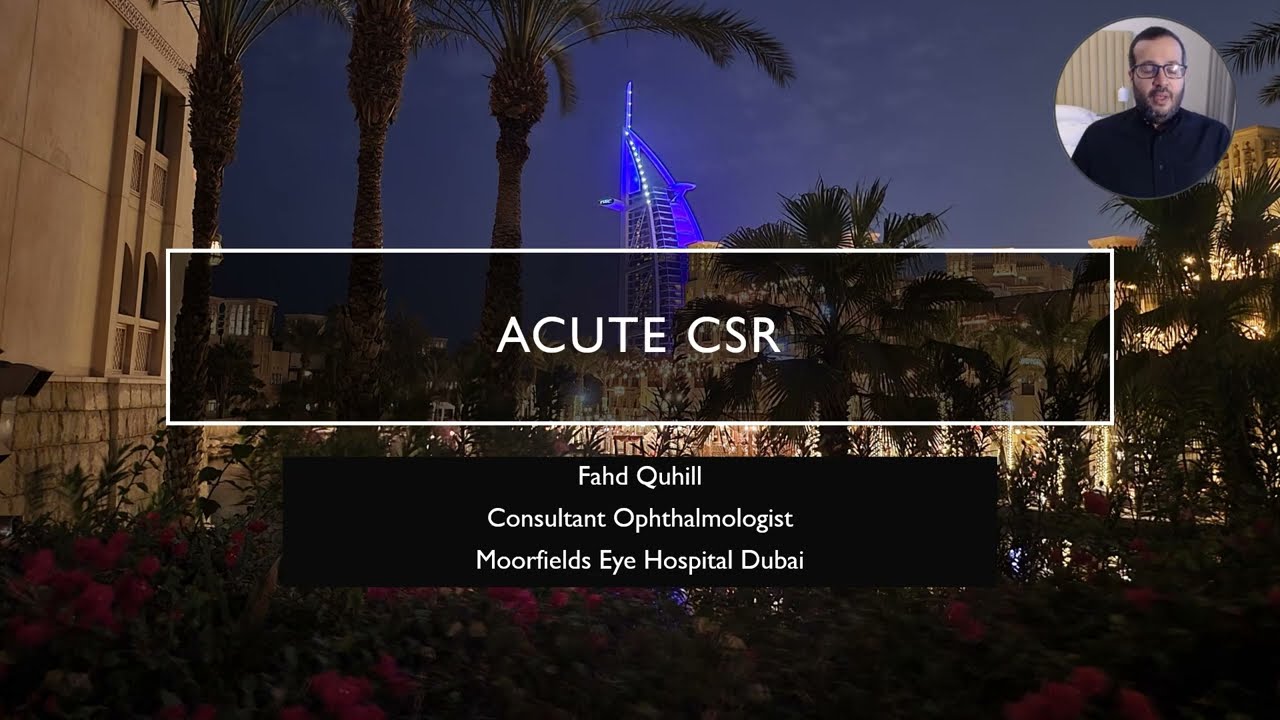
Retinal Debate about the rational pathways for acute CSCR. Joslin Dakhil debates the use of observation, while Marah Hadid argues for treatment. Dr. Ameen Marashi gives the final verdict on rational management, and Dr. Fahd Quhill shares his extensive experience with approaching acute CSCR cases.

In this webinar, eye care professionals discuss and debate the controversial topic of when to intervene versus when to observe in cases of acute Central Serous Chorioretinopathy (CSCR):
Meet our expert panelists who provide arguments, clinical insights, and final verdicts on acute CSCR management.
Defending the use of observation and lifestyle modification for acute CSCR.
Defending the early use of treatment interventions for acute CSCR.
Sharing extensive clinical experience with approaching and diagnosing acute CSCR.
Providing the final verdict on the rational observation vs treatment of acute CSCR.
Watch the full webinar and debate on Treatment vs Observation for acute CSCR.
Joslin Dakhil
Dr. Marah Hadid
Dr. Fahd Quhill
Dr. Ameen Marashi
Key takeaways from each round of the debate:
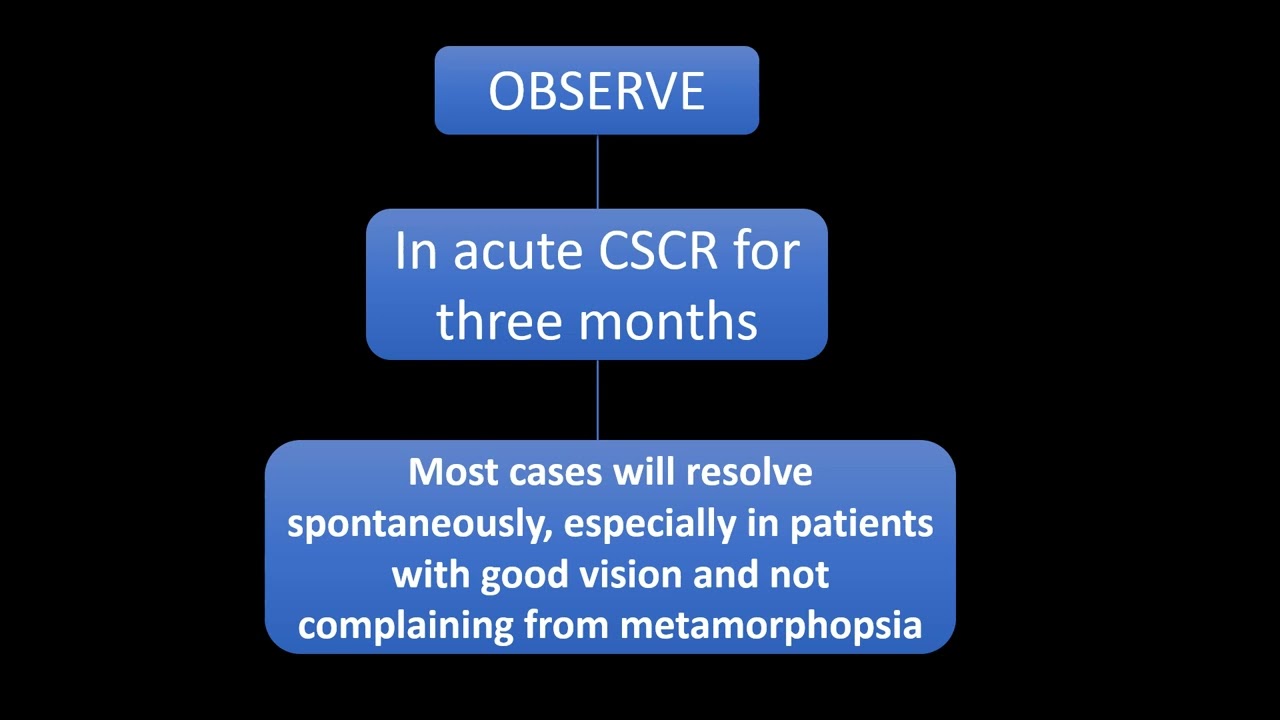
If you have an acute CSCR case, we need an accurate and precise observation because it is a self-limited disease except in cases that need interventions. Also, we should modify the lifestyle of our patients like avoiding stress and limiting the misusing of steroids.
Although most cases of acute central serous chorioretinopathy can be resolved spontaneously, the choice of treatment should be taken in some special cases. Such as, accurate functions, where the patient needs high visual acuity, and cases in which the other eye is affected with chronic or complicated CSCR. Also other cases in which a patient can't wait to resolve for any reason. Every patient with acute CSCR is a unique case, and the decision of treatment should not be deferred when it is necessary.
Acute CSCR is a self-limiting disease and usually resolves spontaneously, hence observation is warranted if there are no high visual demands by the patient after doing a proper counseling and eliminating risk factors like stress and steroid intake. However, it is imperative to rule out other diseases that may mimic CSCR. We should consider treatment in cases of patients with high visual demands, if the other eye suffered from visual loss due to a complication related to CSCR, and in cases of recurrent CSCR.
These presentations are designed for professional education among ophthalmologists. The discussions represent expert opinions and are intended for educational purposes only. All clinical decisions must be made by qualified specialists based on individual patient assessment and established treatment guidelines.
View more retinal debates and expert discussions.
Beyond collaborative meetings, explore our AI tools, curated video courses, and digital textbooks.
AI-powered on-device OCT & FFA decision support and triage assistant. 100% offline and private.
Explore AI Tools →Professional development through curated video courses with self-assessment tests and cases.
Start Learning →A digital library of 10+ clinical textbooks and atlases authored for retina specialists.
View Collection →